

Disclosure: This article contains affiliate links. If you make a purchase through one of these links, National Litographic may earn a commission at no extra cost to you.
Bangkok is one of those cities that can go from dream trip to disaster faster than a tuk-tuk on Sukhumvit at rush hour. The good news is almost every rookie mistake is completely avoidable once someone tells you how things actually work. This is the no-fluff survival guide for backpackers hitting Bangkok in 2026.
Whether it’s your first time or your fifth, Bangkok rewards the people who show up prepared. The city is loud, sweaty, occasionally overwhelming, and absolutely brilliant. It’s also full of people who’d love to separate you from your cash before you’ve found your hostel. So let’s do this properly.
The Bangkok Survival Guide Backpackers Actually Need: Arriving Without Getting Scammed
You land at Suvarnabhumi or Don Mueang, you’re jet-lagged, and approximately seventeen people immediately want to help you get somewhere. Most of them are not helping. Here’s how you survive the first two hours.
From Suvarnabhumi, the Airport Rail Link into the city costs around 45 THB (about $1.25 USD) to Phaya Thai station and takes roughly 30 minutes. That’s it. That’s the move. Don’t let anyone talk you into a “private transfer” in the arrivals hall for 1,200 THB when the train is right there. From Don Mueang, grab a public bus (A1 to Mo Chit BTS, 30 THB) or a metered taxi. Always insist on the meter. Say it out loud before you shut the door: “meter, please.” If the driver refuses, get out.
The scam economy starts the second you exit customs. Bangkok is safe for tourists in 2026, but the city runs on tourist scams, including tuk-tuk gem fraud, “temple closed” detours, and BTS Skytrain pickpocketing, that account for the majority of money lost by visitors. The classic opening move: a friendly stranger near the Grand Palace tells you it’s closed today. You’re walking toward a major temple and someone stops you and says the temple is closed right now for a ceremony or holiday, reopening at 2pm. They helpfully suggest you visit another temple and call a tuk-tuk for you. That tuk-tuk takes you on a shopping tour. The temple was never closed. Walk straight to the entrance gate and ignore everyone outside.
For any taxi or rideshare, use the Grab app. Fixed price, GPS-tracked, no drama. You can also now book a tuk-tuk directly through Grab or the MuvMi app, which offers electric shared tuk-tuks. This gives you a fixed, transparent price and eliminates the stress of negotiating. If you do negotiate a regular tuk-tuk, short trips of 1 to 2 km should cost around 60 to 100 THB, medium trips of 3 to 5 km usually run 150 to 200 THB, and drivers near the Grand Palace or Khao San Road will often quote 300 THB or more. Know what a fair price looks like before you open your mouth.
If you get scammed anyway, contact the Tourist Police or call their toll-free number at 1155. They deal with this stuff daily.
Getting Around Bangkok Without Losing Your Mind
Bangkok’s traffic is not a joke. During rush hour it’s a masterpiece of automotive suffering. The BTS Skytrain is your best friend and you should be using it constantly.
BTS fares in 2026 range from 17 to 65 THB per trip depending on distance, following a distance-based fare system that replaced the old flat fare from November 2025. That’s roughly $0.50 to $1.80 USD for most journeys across the city. If you’re planning a big day out, the BTS One-Day Pass lets you use the Green Line all day for 150 THB. The BTS operates daily from 05:15 to midnight. Get a Rabbit Card from any BTS station, load it up, and tap your way around like a local.
One thing that trips people up: one of the most common mistakes travelers make is assuming “a train is a train.” The BTS and MRT are operated by different companies, and you cannot use a BTS ticket on the MRT or vice versa. You’ll need separate cards or tokens for each. Minor inconvenience. Still miles better than sitting in traffic on Silom Road for 45 minutes.
Avoid peak hours from 07:00 to 09:00 and 17:00 to 19:00 if you want a more comfortable trip. During those windows, trains are absolutely rammed. On the BTS and MRT, wear your backpack on your front during peak hours, avoid back pockets, and know that crowded carriages between Asok, Siam, and Sukhumvit are pickpocket prime time. You’ve been warned. Drink some iced coffee, check the Grab app, and wait 20 minutes if you can.
For getting around Bangkok’s old neighbourhoods like Banglamphu and Rattanakosin, the Chao Phraya Express Boat is genuinely fun and cheap, around 15 to 30 THB depending on the line. Hop on at Saphan Taksin BTS and you’re on the river in minutes.
Where to Stay: Neighbourhoods That Actually Make Sense for Backpackers
Three main zones for budget travellers. Pick one based on your vibe.
Banglamphu and Khao San Road is the obvious one. Yes, it’s touristy. Yes, every other person is carrying a Chang beer singlet. But it’s genuinely convenient for the Grand Palace, Wat Pho, and Wat Arun, hostels are cheap (dorm beds from around 250 to 400 THB, or $7 to $11 USD), and the street food in the surrounding area is excellent. Check availability and compare prices on Hostelworld before you commit to anything.
Sukhumvit is the other extreme. More expensive (dorms from 450 to 700 THB), but you’re right on the BTS, close to everything in the Asok to Thong Lo corridor, and surrounded by good food options at every price point. If you want somewhere that doesn’t feel like a gap year hostel, this is your area.
Silom is a solid middle ground. Slightly quieter than Khao San, great BTS access, close to Lumphini Park, and the night market on Patpong (the non-sketchy side of it) has good street food. Dorms around 300 to 500 THB.
Wherever you stay, use the hotel safe. Keep a backup card, a second copy of your passport, and extra cash there, and set a custom code rather than your room number. Takes 30 seconds and could save your entire trip.

Eating in Bangkok on a Budget: Street Food You Need to Know
This is the easiest win in Bangkok. The food is insane and costs almost nothing. A bowl of khao man gai (poached chicken rice) at a street stall runs 50 to 60 THB ($1.40 to $1.70 USD). A plate of pad see ew from a wok on wheels on Yaowarat Road in Chinatown, around 60 to 80 THB. A mango sticky rice dessert from the stalls near Chatuchak Market, 50 to 70 THB. You can eat properly for 200 to 300 THB a day if you eat where locals eat.
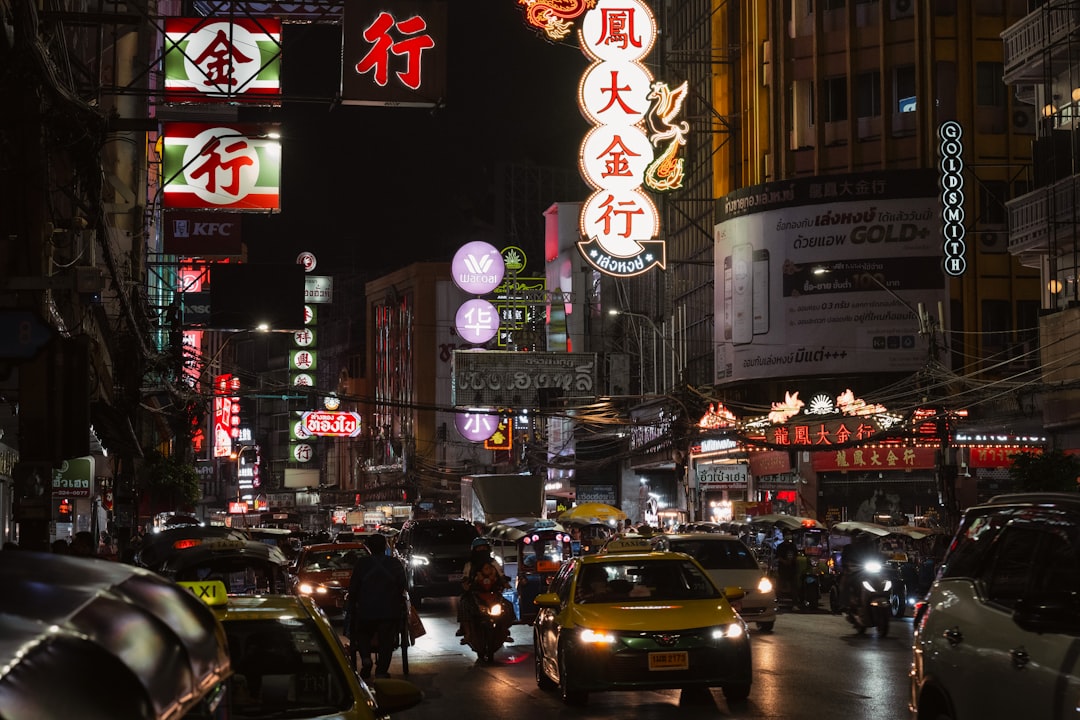
Yaowarat Road in Chinatown is the gold standard for night eating. Get there after 7pm when the stalls are fully running. Order the boat noodles, eat the oyster omelette, and don’t skip the roast duck. The stretch from the Odeon Circle to the river is one long open-air kitchen and it costs almost nothing.
Or Tor Kor Market near Chatuchak is the spot when you want to eat fresh fruit, Thai desserts, and prepared dishes in an actual building with air conditioning. It’s a covered market, not a restaurant, prices are low, and the quality is absurdly good. Grab a bag of fresh rambutan and walk around like you own the place.
One practical note: carry small bills. Because locals now predominantly use QR code payment, always assume that street stalls have no change for large notes. Avoid carrying 500 THB notes and above. Keep a float of 50s and 100s and you’ll never have that awkward moment of a stall auntie staring at your 1,000 baht note like you just handed her a cheque.
Nightlife Basics: Where the Good Stuff Actually Happens
Khao San Road is right there if you want loud music, cheap buckets, and a crowd that’s 90% backpackers. Good for one night. After that, explore.
RCA (Royal City Avenue) is where younger Bangkok locals go to actually party. Venues like Onyx and Route 66 pull big crowds on weekends with decent local DJs and way more Bangkok energy than anything on Khao San. Cover charges run 200 to 400 THB and usually include a drink. You’ll be in the minority as a tourist, which is the point.
Thonglor and Ekkamai (BTS stops on the Sukhumvit Line) are where the cooler Bangkok bars are. Rooftop spots, small cocktail bars, and wine bars for when you want something more low-key. Drinks are pricier here, 200 to 350 THB per cocktail, but the quality is real and the crowd is a Bangkok city crowd, not a tourist crowd.
For sunset rooftop drinks on an actual budget, Penthouse Bar at Park Society in Silom does it cheaper than the mega hotel rooftops. Sky Bar at Lebua is the Instagram classic and the drinks will cost you 600 THB minimum. Worth it once, strictly for the view. Don’t make it your regular move.
Drink water. Seriously. The heat plus alcohol combination in Bangkok will floor you faster than it does back home. One glass of water per hour minimum when you’re out. Your morning self will be profoundly grateful.
Money, SIM Cards, and the Practical Stuff That Trips People Up
ATMs in Bangkok charge a foreign transaction fee of around 220 THB per withdrawal. Every single one of them. The way to avoid this being a disaster is to withdraw larger amounts less often. Find ATMs in reputable spots. You’ll usually find ATMs in front of 7-Elevens, gas stations, banks, and shopping malls. There are always ATMs from several banks next to each other in these spots. Only use ATMs there, and never in secluded spots where there’s only one machine. Wise or a Revolut card will also save you from some of the conversion fees on your home bank’s end.
For a SIM card, get one at the airport arrivals hall. AIS, DTAC, and TrueMove H all have counters right there. A tourist SIM with 30 days of data runs around 300 to 500 THB ($8 to $14 USD) with a decent data allowance. Don’t bother buying one anywhere else, you won’t find a better deal and you’ll waste time. You need data in Bangkok because Grab runs everything and you will be using it constantly.
The official Tourism Authority of Thailand website has the current visa rules and entry requirements, which have been shifting. Check there before you book flights, especially if your passport is from a country with a newer exemption arrangement. Don’t assume what was true six months ago is still true.
One last thing: dress codes at temples are real and enforced. Shoulders and knees covered, shoes off at the door. The Grand Palace entry fee for foreigners is 500 THB ($14 USD). Worth every baht. Go early, before 9am, before the tour groups show up and it becomes a sauna of humanity.
If this is your first big solo adventure, brush up on the core logistics first with this backpacking basics guide before you land. And if Bangkok is a stop on a longer festival-heavy trip, the festival survival guide is worth a read for Songkran season especially. For more destinations at every price point, the full destinations hub has you covered.
Key Takeaways
Bangkok rewards the prepared traveller and absolutely punishes the careless one. Get the basics right and you’ll have one of the best trips of your life.
- Use the Airport Rail Link from Suvarnabhumi (45 THB) instead of any “private transfer” offer in the arrivals hall.
- Always take the BTS Skytrain when you can. Fares range from 17 to 65 THB in 2026 and it beats Bangkok traffic every single time.
- Use Grab for all taxis and tuk-tuks. Fixed price, no negotiation, no scam.
- Keep your passport, main bank card, and most of your cash in a neck wallet under your clothes, with only a small daily float in your front pocket.
- The Grand Palace “closed today” scam is everywhere near major temples. Walk straight to the entrance gate and ignore everyone outside it.
Get the logistics sorted before you land, keep your wits about you the first 48 hours, and Bangkok will absolutely deliver.
FAQs
Is Bangkok safe for solo backpackers in 2026?
Yes, Bangkok is generally safe for tourists. Violent crime against tourists is rare. The real risks are financial: pickpocketing on crowded BTS trains, taxi overcharging, and the standard tourist scam circuit around major temples. Use Grab, keep valuables secured, and stay aware in crowded areas and you’ll be fine.
How much does a hostel dorm bed cost in Bangkok?
Budget dorm beds in Banglamphu run around 250 to 400 THB per night (roughly $7 to $11 USD). In Sukhumvit the range is more like 450 to 700 THB. Book ahead if you’re arriving during Songkran in April or the high season from November to February, prices spike and beds disappear fast.
What’s the best way to get from Suvarnabhumi Airport into central Bangkok?
The Airport Rail Link is the fastest and cheapest option, around 45 THB to Phaya Thai station on the BTS network. The journey takes about 30 minutes. From there you can transfer to the BTS to get anywhere in the city. Metered taxis are also fine if you insist on the meter upfront.
Do I need a visa to visit Thailand in 2026?
Many nationalities currently qualify for a visa exemption on arrival, but the terms have been updated multiple times recently. Check the current entry requirements on the official Tourism Authority of Thailand website before you book anything. Don’t rely on what a forum post from eight months ago says.
What’s the tuk-tuk scam and how do I avoid it?
Someone near a major temple tells you it’s closed today and offers to arrange a “quick” tuk-tuk tour while you wait. The temple is open. The tuk-tuk will take you to gem shops or tailor shops where the driver earns a commission. Ignore anyone who approaches you outside a temple entrance, walk directly to the ticket gate, and book rides through Grab instead of flagging down random tuk-tuks.
Did You Survive Bangkok?
Bangkok is genuinely one of the best cities on earth for backpackers, the food costs nothing, the BTS goes everywhere, and the nights can go as long as you want them to. The only people who have a bad time are the ones who didn’t read anything before they landed and handed 300 baht to a stranger for a ride to a gem shop. Don’t be that person. Show up with a Grab app, a Rabbit Card, and a rough idea of which scams to ignore, and Bangkok will give you a trip worth talking about for years.


